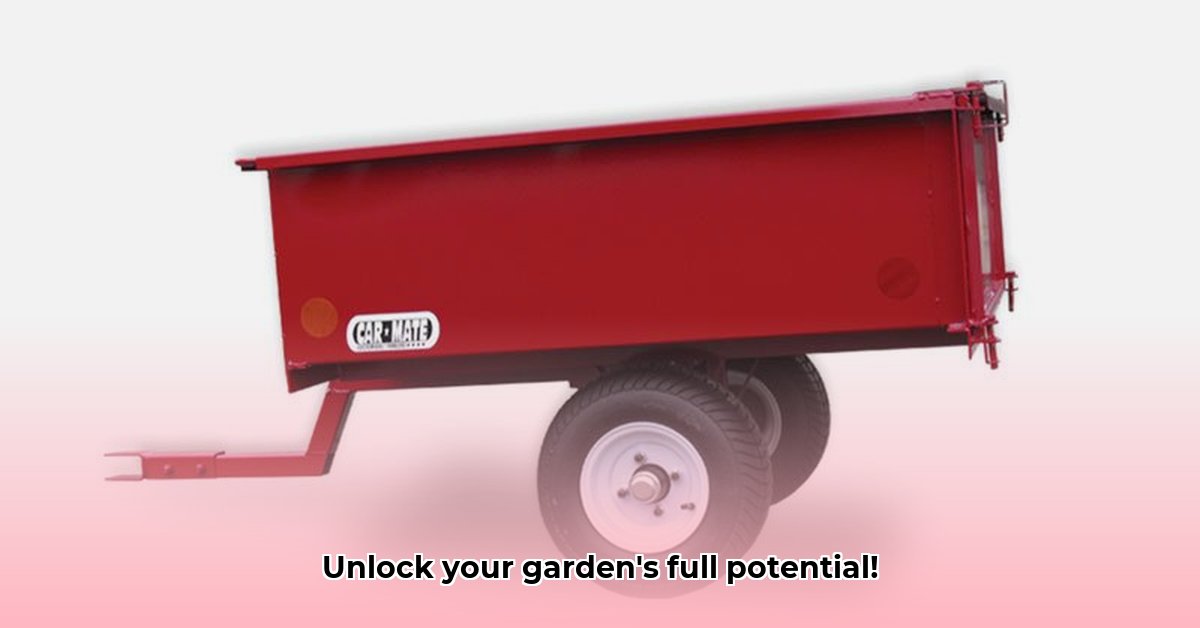
Tired of backbreaking work moving harvests? Sustainable farming demands efficiency, and a well-chosen dump cart or trailer is key. This guide provides actionable advice to help you select and use the right equipment, boosting your farm's productivity while minimizing environmental impact. We’ll cover selecting the ideal trailer, safe operation, long-term sustainability, and budgeting strategies. For more on hitches, check out this helpful resource: Hitch ball info. Let's get started!
Selecting the Perfect Lawn Tractor Garden Trailer for Your Needs
Choosing the right trailer means finding the perfect fit for your farm, not just the flashiest model. Consider these key factors:
Capacity and Size: Matching Your Harvest
How much do you typically harvest? A small backyard garden needs a compact trailer; a larger farm requires more capacity. An oversized trailer wastes money; an undersized one creates inefficiency. What's the sweet spot between capacity and your typical harvest volume?
Types of Trailers: Finding the Right Fit
Trailers vary greatly in design. Some prioritize heavy-duty hauling; others excel in maneuverability. What materials will you transport? Heavy vegetables? Delicate seedlings? Bulky tools? The table below provides a comparison of common types:
| Trailer Type | Capacity (Approximate) | Best for Terrain | Typical Cost Range ($) | Pros | Cons |
|---|---|---|---|---|---|
| Small Dump Cart | 2-5 cubic feet | Flat, relatively smooth | 100-500 | Maneuverable, lightweight, inexpensive | Limited capacity, may not be durable enough for heavy loads |
| Medium Utility | 5-10 cubic feet | Most terrains | 500-1500 | Versatile, reasonable capacity, relatively durable | Can be heavy, less maneuverable than smaller carts in tight spaces |
| Heavy-Duty Trailer | 10+ cubic feet | All terrains | 1500+ | High capacity, robust construction, built to last | Expensive, less maneuverable, may require a more powerful tractor |
Terrain and Soil Conditions: Navigating Your Landscape
Hilly terrain or soft soil demands a robust trailer. A lightweight cart might suffice on flat, hard-packed land, but it could struggle elsewhere. Wider tires distribute weight better, reducing compaction and preventing getting stuck. How will your soil and terrain affect your choice?
Budgeting and Financing: Making it Affordable
Trailers range widely in price. Factor in maintenance and repairs. Leasing offers flexibility. Explore grants and subsidies for small-scale farmers, significantly reducing costs. How can you leverage financing options to make this investment worthwhile?
Getting the Most Out of Your Lawn Tractor Garden Trailer
Investing in a good trailer is only the first step. Effective use maximizes its value and minimizes problems.
Safety First: Always follow manufacturer instructions. Never overload the trailer. Regularly inspect for damage.
Minimize Soil Compaction: Plan routes to avoid repeatedly driving over the same areas, especially in soft soil. Wider tires help distribute weight.
Regular Maintenance: Clean after each use, lubricate moving parts, and address repairs promptly. Preventative maintenance is cost-effective.
The Sustainability Story: Choosing a Responsible Trailer
Sustainable farming considers the environmental impact of equipment.
Sustainable Materials: Look for trailers made from recycled or sustainably sourced materials to reduce your environmental footprint.
End-of-Life Considerations: Inquire about recycling programs or the ability to salvage components. Responsible disposal is crucial.
Electric Options: Electric-powered trailers are becoming more common, reducing your carbon footprint. Keep an eye on this developing technology.
Conclusion: Maximize Efficiency, Minimize Impact
Choosing and using a lawn tractor garden trailer effectively enhances farm efficiency and sustainability. It’s an investment in your farm’s long-term success and environmental responsibility. Assess your needs, research options, and choose wisely. Your farm will thank you for it.